
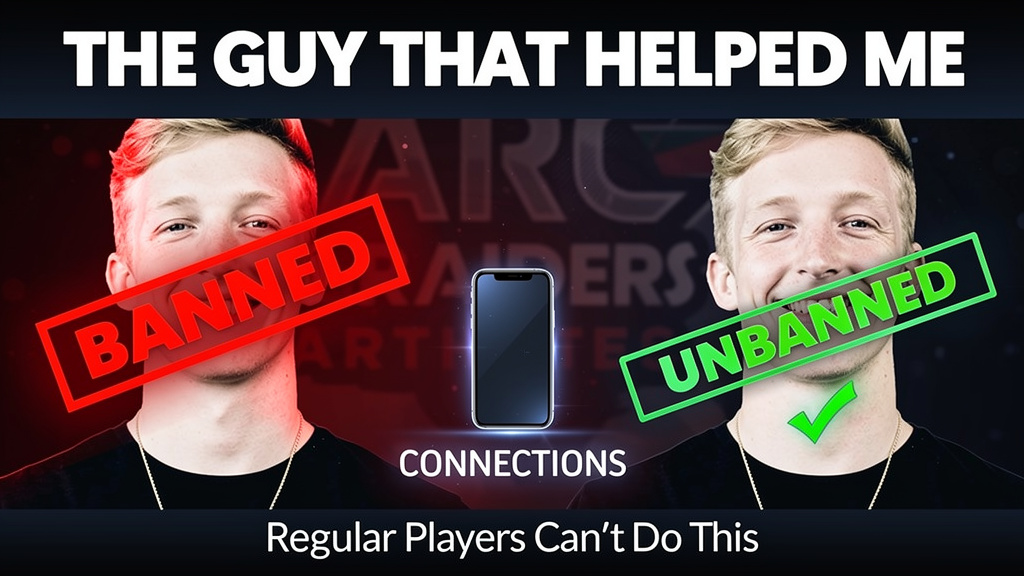
Popular streamer Tfue made a revealing admission during a live stream that exposes what many in the gaming community have long suspected: when you're famous enough, the rules are negotiable.
While casually discussing his recently reversed 30-day ban from Arc Raiders, Tfue let slip the quiet part out loud: “The guy that helped me talk to Embark to get my account unbanned…”
Not “I submitted an appeal through the proper channels.” Not “Embark reviewed my case and found an error.” Not “the automated system corrected a mistake.”
“The guy that helped me talk to Embark.”
This single sentence reveals everything wrong with how game publishers handle enforcement for influencers versus regular players.
Tfue's explanation for his ban gets even more interesting. According to him, Embark asked what peripherals he was using and whether he'd switched anything recently. His answer? A foot pedal connected to his gaming PC.
The conversation reveals several concerning elements:
“They were asking me what peripherals I'm using and if I switched them anytime recently”
This suggests Embark was working backwards from the conclusion that Tfue must be innocent, trying to find any technical explanation for a detection that flagged his account. They weren't investigating whether he violated their terms—they were helping him find an excuse.
“Imagine I got banned because of a foot pedal”
This framing is intentional. By making the ban sound absurd (who gets banned for a foot pedal?), Tfue plants the seed that the entire detection was obviously wrong. But here's what he doesn't address: What did the foot pedal do? What was it programmed to do? Why was it connected to the gaming PC rather than a separate streaming PC like his friend's?
One of the other speakers notes: “I use a foot pedal but it's in the stream PC.” This raises an obvious question: Why was Tfue's foot pedal connected to his gaming PC? What gaming function could a foot pedal possibly serve that wouldn't be automated input?
Let's contrast Tfue's experience with what Embark tells regular players. From their official Ban and Enforcement Policy:
“Can my ban be removed if someone else used my account to cheat? NO. You are responsible for your account's security and activity.”
But apparently if you're Tfue, you can have “a guy” who helps you “talk to Embark” and discuss your peripheral setup until they find a reason to reverse the ban.
“When you submit an appeal, we unfortunately cannot offer specific details about what caused the ban. This is done to maintain the integrity of our security and anti-cheat systems.”
Yet Tfue received detailed questions about his peripherals and recent changes to his setup. The “integrity of security systems” apparently doesn't apply when the right person makes the call.
“Can I appeal a ban on behalf of someone else? No. We can only discuss account matters with the account owner.”
But “the guy that helped me talk to Embark” suggests someone else was involved in facilitating Tfue's appeal in ways not available to regular players.
What makes this situation particularly egregious is Tfue's response after being unbanned. He posted:
“All those mfs that said I was cheating suck my a**hole.. go die, resurrect, & die again.. in game of course..”
This isn't the response of someone humbled by a false positive who wants to improve the system for everyone. This is the response of someone who knows the rules don't apply to them and wants to rub it in.
Consider what this message communicates:
If Tfue genuinely believed he was innocent and the system was flawed, wouldn't his response be: “This experience showed me how broken the ban appeal system is. Regular players deserve the same access to technical review that I got”?
Instead, it's essentially: “I won, you lost, go die.”
Tfue's admission exposes how enforcement actually works at Embark Studios:
The policy documents make this crystal clear. Under “Ban Appeals,” Embark states:
“Can you tell me why my account was banned? When you submit an appeal, we unfortunately cannot offer specific details about what caused the ban.”
But Tfue got specific questions about his peripherals. Tfue got someone investigating his setup. Tfue got human interaction working to find an explanation.
The regular player gets: “We can't tell you why, maintaining system integrity.”
Let's examine the foot pedal explanation more critically, because it's designed to make you stop asking questions.
What we're told: Maybe the foot pedal triggered a false positive!
What we're not told: What was the foot pedal programmed to do?
What we're told: It's connected to the gaming PC!
What we're not told: Why would a foot pedal need gaming PC access unless it's controlling in-game actions?
What we're told: Other people use foot pedals without issues!
What we're not told: What those foot pedals do, and whether they're used differently
The foot pedal explanation works because most people don't think too hard about it. “Oh, peripheral conflict, makes sense, anti-cheat makes mistakes.”
But anti-cheat systems don't ban for hardware existing. They ban for what that hardware does. The question isn't “was there a foot pedal?” The question is: “what was the foot pedal programmed to do that triggered automated detection designed to catch cheating?”
That question remains unanswered.
This isn't unique to Tfue or Arc Raiders. This is the standard playbook:
We've seen this exact pattern with:
Every time, the same story: “I have a friend who knows someone” or “I was able to talk to them directly” or in Tfue's case, “the guy that helped me talk to Embark.”
Let's be clear about what Tfue admitted: He had someone facilitate direct contact with Embark Studios in a way that regular players cannot access.
This wasn't:
This was:
Embark's policy states: “Can I appeal a ban on behalf of someone else? No.”
But someone helped Tfue talk to Embark. Someone made the introduction. Someone facilitated the conversation. That is literally appealing on behalf of someone else, or at minimum, providing access that regular players don't have.
Tfue isn't just a casual player. He's a highly skilled competitive gamer with a massive platform. When someone at his level:
It creates an impossible situation for competitive integrity. How can anyone verify that top players are competing cleanly when we know enforcement is selectively applied based on influence?
This isn't an accusation that Tfue cheats. This is an observation that the system he benefited from makes verification impossible. When connected players can bypass enforcement, competitive integrity becomes unknowable.
1. Who was “the guy that helped you talk to Embark”?
Name them. Let the community know who's facilitating these backdoor appeals.
2. What did Embark's anti-cheat actually detect?
Not “maybe it was the foot pedal.” What was the specific behavior or pattern that triggered the ban?
3. What is your foot pedal programmed to do?
If it's innocent, explain it. Why is it connected to the gaming PC? What gaming functions does it serve?
4. What evidence did Embark review to reverse your ban?
Was there a technical analysis? What did it find? Why isn't this process available to everyone?
5. Do you think regular players deserve the same access you got?
If yes, what are you doing to advocate for them? If no, why do you deserve special treatment?
Tfue has answered none of these questions. Like every other unbanned influencer, he provides no transparency, no accountability, and no concern for the players who don't have “a guy.”
Everything Tfue describes requires Embark's active participation. This isn't a rogue employee doing a favor. This is:
When Tfue says someone “helped him talk to Embark,” he's describing institutional favoritism that Embark has chosen to maintain.
The company benefits from this arrangement:
Tfue's admission should trigger questions at Embark Studios:
These questions won't be answered, because asking them would expose what Tfue already confirmed: the system is working as designed.
Imagine you're a regular Arc Raiders player:
How do you not feel completely demoralized?
You don't have “a guy.” You don't have connections. You don't have a platform with millions watching. You just have the automated system and the policies that explicitly state most bans are final.
This is the community cost of the favoritism Tfue exposed. Every regular player knows they're second-class citizens in a game where influence determines justice.
The foot pedal explanation is genius from a PR perspective because it:
But it doesn't actually explain anything:
These technical questions go unanswered because asking them might reveal that the foot pedal explanation is just a convenient excuse found after working backwards from “we need to unban Tfue.”
Every time a publisher reverses a ban for a connected player while maintaining strict policies for regular players, they:
Tfue's case is just the latest example. The pattern is now undeniable:
If Embark genuinely cared about fair enforcement, they would:
1. Public transparency on all ban reversals for public figures
2. Equal appeals access for all players
3. Independent third-party review option
4. Ban appeal statistics
5. Zero tolerance for using connections
None of this will happen, because it would eliminate the exact system that benefited Tfue. Embark doesn't want reform—they want plausible deniability while protecting their marketing assets.
Here's what we don't know and will never officially learn:
Was Tfue's ban legitimate?
We know:
What we don't know:
Because Embark refuses to provide transparency, we can't verify their decision. We just have to trust that their investigation was thorough and that they're not simply protecting a valuable content creator.
Based on Tfue's own admission that someone “helped him talk to Embark” in ways not available to regular players, that trust is impossible to maintain.
“The guy that helped me talk to Embark to get my account unbanned”
This single sentence confirms what the gaming community has known for years: enforcement is a two-tier system where your follower count matters more than the evidence.
Tfue didn't hide it. He didn't pretend he went through normal channels. He casually admitted that he had help getting special access to the company—access that regular players explicitly don't have according to Embark's own policies.
And then he mocked everyone who questioned whether his ban was deserved.
This is the state of competitive gaming in 2026: the rules are negotiable if you're famous enough, connections matter more than evidence, and companies will protect their marketing assets while abandoning regular players to automated systems.
Until there are real consequences—legal challenges, regulatory scrutiny, advertiser pressure, mass player boycotts—nothing will change. Embark has no incentive to fix a system that serves their business interests perfectly.
Tfue will keep his unbanned account. Regular players will keep getting denied appeals. And Arc Raiders will continue operating a justice system where “the guy that helped me talk to Embark” is a feature, not a bug.
The corruption isn't hidden anymore. Tfue said the quiet part out loud.
The only question is whether anyone will actually demand reform, or if we'll all just move on to the next controversy while the two-tier system continues operating exactly as designed.
“The guy that helped me talk to Embark to get my account unbanned said it might have been my foot pedal.”
— Tfue, casually admitting to systematic favoritism while blaming peripheral hardware