
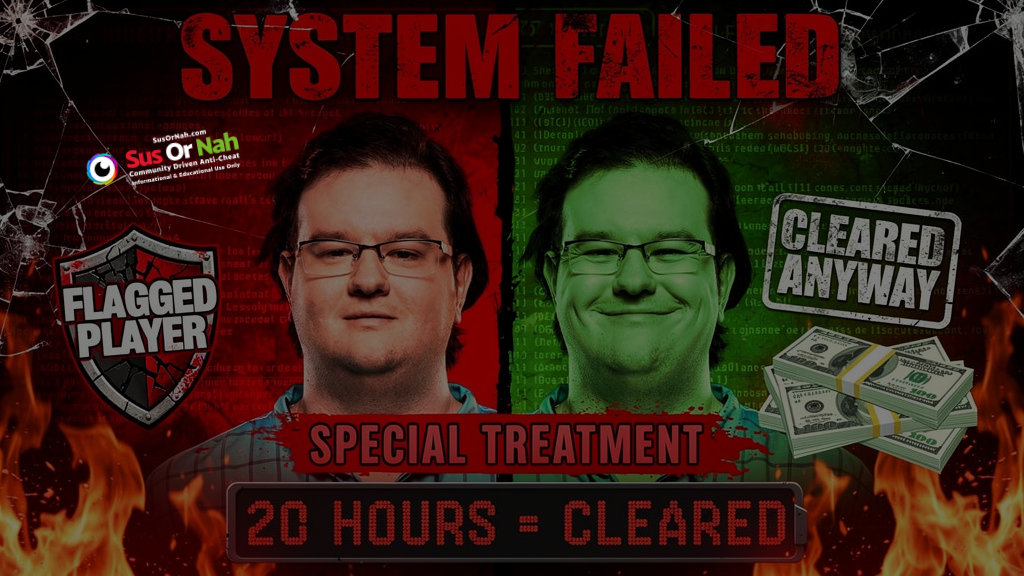
A Christmas Day Reckoning That Raises More Questions Than Answers
On December 25th, 2025, prominent Warzone streamer Metaphor received what many in the Call of Duty community had been anticipating for years: a permanent ban for “unauthorized software and manipulation of game data.” The ban came during a live stream while Metaphor sat atop Twitch’s Warzone directory with approximately 1,400 viewers—peak visibility for what should have been an unequivocal enforcement of Activision’s anti-cheat policies.
Less than 24 hours later, on December 26th, the ban was reversed.
The automated Ricochet anti-cheat system flagged Metaphor’s account and issued a permanent ban—the most severe punishment available, reserved for the most egregious violations. The official notification stated the ban was for “unauthorized software and manipulation of game data in breach of Article 3 of the Call of Duty Software License.”
This is not the language of a shadowban triggered by player reports. This is the language of detection: software on the system that shouldn’t be there, or data manipulation that crosses clear lines.
For context, Metaphor is one of Warzone’s highest-volume grinders, regularly streaming 12-14 hour sessions and maintaining the #1 or #2 position for total kills globally. He’s a mouse and keyboard player who consistently drops 30-40 kill games in solos—performance that would be impressive for anyone, but especially notable given the mechanical disadvantages of M&K versus controller in Warzone.
Approximately 15-20 hours after the ban, Metaphor was unbanned. He received no explanation for why he was banned. He received no explanation for why he was unbanned. He was simply told his account had been “investigated” and that “while some detections were triggered,” the account was being reinstated.
This is where the system’s fundamental unfairness becomes impossible to ignore.
What Metaphor had that regular players don’t:
Metaphor himself acknowledged this advantage repeatedly during his banned stream: “If Tim the Tatman got banned right now, he would get unbanned… I need that connection.”
Metaphor and his supporters point to several factors as proof of legitimacy:
1. “No suspicious clips exist”
This argument assumes that sophisticated cheating must be obvious. Modern cheats, particularly those designed for content creators, are specifically engineered to be subtle and undetectable in gameplay footage.
2. “He died to obvious players during world record attempts”
Selectively toggling cheats on and off to maintain plausible deniability is Cheating 101 for anyone trying to avoid detection. Dying occasionally to obvious enemies doesn’t prove innocence—it proves awareness of optics.
3. “He showed his PC had no DMA card”
A video showing the inside of his PC proves nothing. DMA (Direct Memory Access) cards can be installed in separate systems entirely. Software-based cheats leave no visible hardware trace. Anyone sophisticated enough to cheat for years would know not to have obvious hardware when streaming.
4. “He’s good at other games too”
Being skilled at League of Legends or Marvel Rivals doesn’t preclude cheating in Call of Duty. In fact, it provides perfect cover: “I’m good at hard games, therefore I must be legitimate in easier ones.”
5. “Activision manually reviewed and cleared him”
This is the most troubling defense of all, because it assumes Activision’s review was thorough and unbiased. Given that the person managing influencer relations was involved, and given the speed of the reversal, there’s substantial reason to question whether this was a genuine technical review or corporate damage control.
Based on Metaphor’s own statements during his streams, here’s what we know:
If this truly was a false positive from a legitimate setup, why wouldn’t Activision provide an explanation of what caused it? The silence suggests either:
A) They don’t want to reveal detection methods (protecting anti-cheat)
B) They don’t want to admit the real reason (protecting the streamer)
C) There was no technical justification—it was a business decision
Metaphor uses ExitLag, a third-party program that manipulates network routing and connection data. While marketed as a ping optimization tool, it fundamentally alters how his client communicates with Activision’s servers.
His defense: “Lots of people use it and don’t get banned.”
The counterpoint: Most people using ExitLag aren’t also:
The combination of third-party network manipulation + extraordinary performance + automated detection triggers = reasonable suspicion.
Metaphor claims he was “never told not to uninstall it” and continued using it after the unban. This is presented as exculpatory evidence. In reality, it suggests either:
Metaphor’s case is not isolated. He correctly notes that other streamers—Bobby Poff, Destroy, Adrian—have all been permabanned and subsequently unbanned. He presents this as evidence that false positives happen.
An alternative interpretation: The anti-cheat is working, but Activision routinely reverses legitimate bans for influencers.
Consider the incentive structure:
When Bobby Poff was banned, did Activision’s anti-cheat make a mistake, or did business concerns override enforcement? When Adrian was banned (before this incident), was it a false positive, or was it later reversed for influencer relations purposes?
The fact that no major streamer permaban has ever stuck on Black Ops 7 is either an extraordinary coincidence or evidence of systematic preferential treatment.
During his banned stream, Metaphor inadvertently revealed the extent of streamer privilege:
“I messaged like 20 fucking people… I’m waiting for responses… I got a good message, we’re being investigated.”
Regular players don’t have 20 Activision contacts to message. Regular players submit appeal tickets that generate automated denials. Regular players don’t get “investigated”—they get a form letter and permanent loss of account access.
Metaphor’s own viewer confirmed this disparity: “A friend of mine got permabanned, no streamer, just an average 1.5 KD player, and got unbanned two weeks later. He doesn’t even know what happened.”
If non-streamers can be falsely banned for weeks with no communication, while streamers get same-day manual review and reinstatement, the system is broken by design.
Metaphor’s defenders point to his immediate post-unban performance as proof of innocence:
The argument: “If he was cheating and had to remove cheats, he couldn’t perform like this.”
The counterargument: This proves nothing. A skilled player using subtle assistance (information, slight aim enhancement, enemy awareness) would still be very good without it—just not quite as consistent. The performance drop from “cheating” to “merely very good” might be invisible in small samples.
Additionally, Metaphor himself noted: “These lobbies are diabolical… these lobbies are fucking crazy.” If lobby quality was soft after his unban (possible due to account flagging, MMR reset, or Christmas Day player pool), his performance might simply reflect easier opposition.
In criminal justice, the accused are innocent until proven guilty. In competitive gaming, the standard must be reversed for integrity to survive.
Here’s why: In traditional crime, wrongful conviction means innocent people suffer. In gaming, wrongful non-conviction means cheaters prosper and legitimate players suffer. The harm asymmetry is reversed.
When Ricochet flags an account for unauthorized software and data manipulation, that should be sufficient for permanent ban unless the player can demonstrate their innocence—not the other way around. The current system, where influencers can get bans reversed by claiming ignorance and having connections, invites abuse.
Metaphor’s response to his ban exemplifies this problem:
A truly innocent player would demand to know what triggered the detection to prevent recurrence. Metaphor showed no interest in technical explanation—only in reversal.
Throughout his streams, Metaphor repeatedly stated: “If they tell me what happened, I’ll tell you guys so it doesn’t happen to you.”
This presents him as concerned for his community. But consider the alternative: What if he already knows what happened and can’t say?
If Metaphor was told “we detected [specific software/method], but we’re giving you a pass,” he obviously couldn’t share that without admitting guilt. His repeated emphasis on not knowing becomes necessary cover.
The fact that Activision provided zero technical details about what triggered the ban is highly suspicious. When legitimate software causes false positives, companies typically:
The complete silence suggests the detection was legitimate and the reversal was discretionary—not technical.
While Metaphor’s viewers celebrated his return, the broader Call of Duty community responded with justified skepticism and anger. Comments on social media revealed deep frustration:
“Genuinely sad that people like this can get away with everything and probably will till we all die.”
“It’s been proven that you’re a cheater. No matter how many followers you have, even if your ban is lifted, you’re now a worthless player.”
“This sets the precedent that streamers get special treatment for fraud.”
These aren’t random haters—these are players who feel the game’s integrity is being sold out for marketing purposes. They see streamers getting manual review while their own accounts rot in permanent ban purgatory for unclear violations.
One viewer noted: “I got permabanned playing fucking zombies. I’ve never even touched multiplayer. Still banned.”
As Metaphor himself noted, no major streamer permaban has stuck on Black Ops 7. Every high-profile ban has been reversed:
Meanwhile, Reddit and social media are filled with stories of legitimate players who:
The message is clear: Your account’s permanence depends on your follower count, not your innocence.
Perhaps most insidious is how Metaphor and his community respond to legitimate skepticism. Throughout his streams, he:
When someone suggested he simply “move on” from discussing the ban, Metaphor responded: “Telling me to just move on when if I would have stayed banned, you would have kept slobbering on it. It’s crazy.”
This reveals the actual dynamic: Criticism of potential cheating is “slobbering” and “hate,” but his aggressive retaliation is justified defense. The framing is designed to suppress legitimate questions.
The Metaphor case represents everything wrong with modern anti-cheat enforcement:
1. Two-tier justice system: Streamers get manual review and reversal, regular players get automated denial
2. Zero transparency: No one knows what triggers bans or why they’re reversed
3. Perverse incentives: Cheating pays if you’re popular enough to force reversal
4. Community gaslighting: Legitimate concerns are dismissed as “hate” from “morons”
5. No accountability: Those making reversal decisions face no consequences for favoritism
1. What specifically triggered Metaphor’s ban?
If it was a false positive from legitimate software, name the software so others can avoid it.
2. What investigation was conducted?
Who reviewed the account? What technical analysis was performed? What evidence was examined?
3. Why was the ban reversed?
If detection methods triggered legitimately but were overridden, explain the justification.
4. Who made the reversal decision?
Was it anti-cheat engineers or influencer relations management?
5. How many non-streamers are permanently banned from similar false positives?
If the system produces false positives, how many innocent players remain banned because they lack connections?
Activision has answered none of these questions. The silence is damning.
While different individuals may have been involved in Metaphor’s case, the broader pattern mirrors the Adrian situation: influencer relations appears to override anti-cheat enforcement.
When someone whose job is maintaining streamer relationships has any involvement in ban reversal decisions, there is an inherent conflict of interest. The person tasked with keeping influencers happy should not be the same person deciding whether their ban was legitimate.
This creates a system where:
1. Consistent enforcement: Same rules for everyone, zero exceptions
2. Transparent appeals: Real human review available to all players, not just streamers
3. Published criteria: Clear explanation of what triggers bans and what constitutes violations
4. Separation of duties: Anti-cheat decisions made by anti-cheat engineers, not marketing/influencer relations
5. Compensation for false positives: If accounts are wrongly banned, players should be compensated for lost access to purchased content
6. Public accountability: When bans are reversed, publish the technical justification
Here’s what we know for certain:
Either Ricochet works and caught something real, or it doesn’t work and shouldn’t be trusted. Activision can’t have it both ways.
Lost in Metaphor’s triumphant return are the countless players who:
One viewer in Metaphor’s chat said it plainly: “My friend got permabanned, 1.5 KD player, not a streamer, unbanned two weeks later. He still doesn’t know why he was banned or unbanned.”
Two weeks versus 20 hours. That’s the influencer advantage quantified.
Whether Metaphor is actually cheating is, in some ways, beside the point. The system itself is broken when:
Metaphor’s case proves that if you’re popular enough, the rules simply don’t apply. His first three games after “removing all cheats” (per the cheating narrative): 41-37-31 kills. Two games later: 50-kill world record.
He’s either the most naturally talented player in Warzone history who coincidentally got falsely banned during peak viewership on Christmas…
Or the anti-cheat did its job, and Activision chose marketing over integrity.
The company’s refusal to provide any explanation tells us which one is more likely.
For a game already struggling with perception of widespread cheating, for a community already cynical about influencer privilege, for an anti-cheat system already questioned for effectiveness—the Metaphor unban is a devastating self-inflicted wound to whatever credibility remained.
Competitive gaming cannot survive when the rules only apply to those without leverage. Activision must choose: protect the integrity of competition, or protect the feelings of influencers.
Right now, the choice is clear. And it’s the wrong one.
The gaming community deserves better. Players deserve better. And it starts with enforcing the rules equally—no exceptions, no influencer relations, no corporate convenience. Without integrity, there is no competition. Just theater.